1. Rates: 8% accommodation, 23% F&B
Article 41 of Ustawa o VAT together with załącznik nr 3 puts short-term accommodation services on the reduced rate of 8%. This covers the pure room-night line on your invoice, breakfast bundled into a rate plan, and extra-bed supplements sold as part of the room product. It does not cover restaurant food and drink sold à la carte, spa services, laundry sold separately, or paid parking — all of those revert to the standard 23% rate.
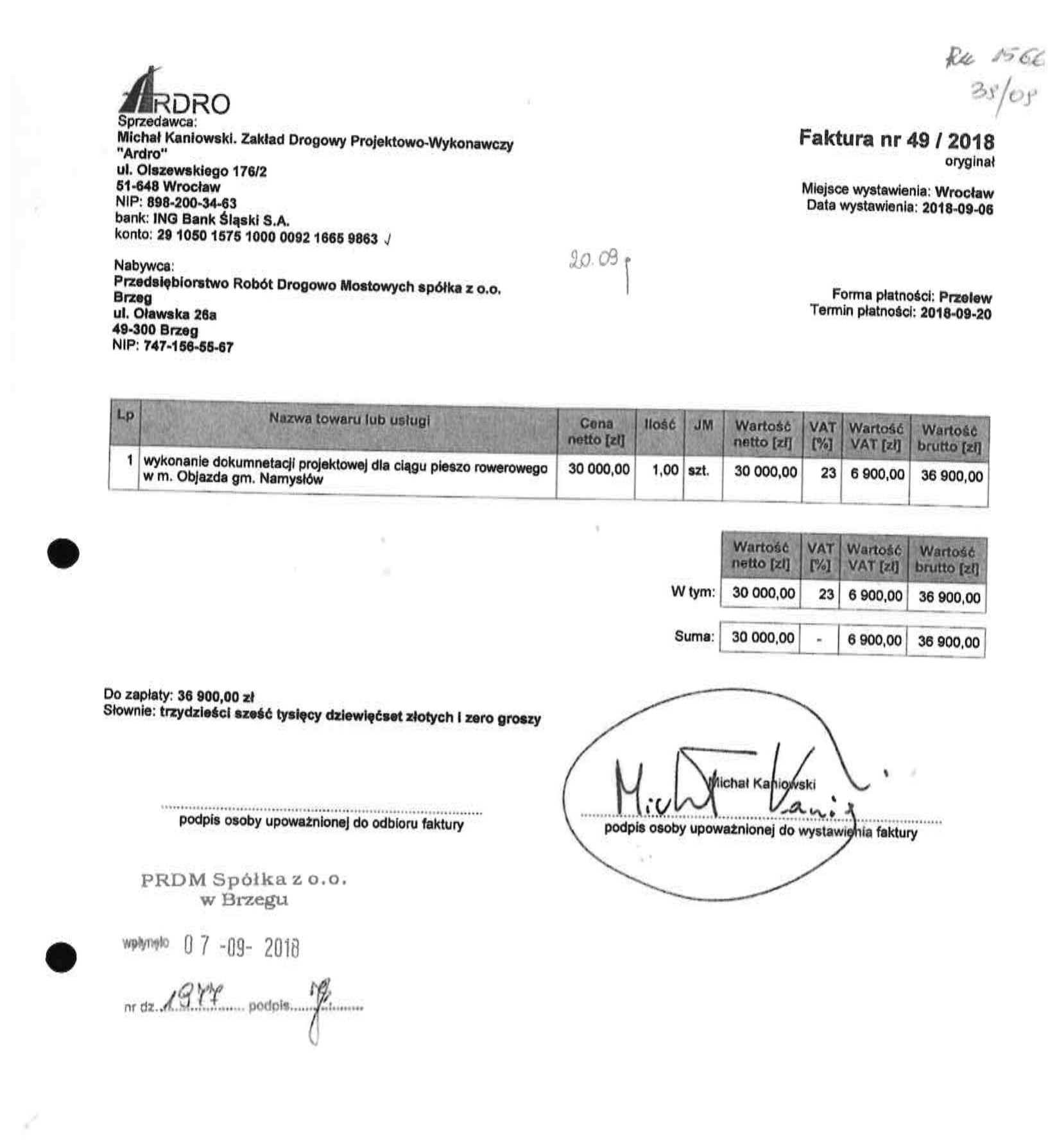
The distinction sounds small until you look at a folio with a rate plan called "BB — bed & breakfast." That single stay line frequently mixes 8% and 23% inside a single amount, and if your PMS or CRS is not splitting them explicitly you are legally under-declaring the standard-rate portion. Our VAT Invoice Automation module reads the reservation from the Profitroom Reservations API, applies a rate-map you configure once per rate plan, and generates a compliant invoice with split lines.
2. JPK_VAT filing
Since 2020 the Polish VAT return (VAT-7) is filed exclusively as JPK_V7M (monthly) or JPK_V7K (quarterly). The file is XML, submitted to Ministerstwo Finansów by the 25th of the following month. Every issued sales invoice appears line-by-line inside the ewidencja sprzedaży section, with a GTU code where applicable — most hotel services do not carry a GTU code, but sales of alcohol from the minibar do (GTU_01 for spirits, GTU_02 for wine).
The single most common JPK_VAT error we see on hotel books is F&B lines being posted with the wrong VAT rate — either the whole invoice on 8%, or the whole invoice on 23%. When Suite Profit's VAT Automation module writes the JPK_V7M line entries it splits every line according to the rate-map, and it flags any invoice where a mixed rate would be expected but only one appears.
3. KSeF: mandatory e-invoicing from 1 August 2026
The Krajowy System e-Faktur (KSeF) becomes mandatory for Polish VAT payers with sales above 200 million PLN from 1 February 2026, and for everyone else from 1 August 2026. In practice every Polish hotel that issues VAT invoices — which is every Polish hotel with any B2B guest — will need to be issuing structured e-invoices through KSeF from that date. Paper invoices and PDF-only invoices to Polish counterparties will no longer be legally valid.
KSeF issues each invoice a KSeF number, which is the legal proof of issue. The XML schema (FA(2)) is fixed by the Ministry. The corresponding webhook back to your accounting system carries the KSeF UUID plus the timestamp. Our VAT Automation module has been in KSeF-integration beta since April 2026 and reaches GA on 15 August 2026, with automatic FA(2) generation from the Profitroom reservation feed.
4. Split payment (MPP)
Split payment — mechanizm podzielonej płatności — is mandatory in Poland for B2B invoices over 15,000 PLN gross that include goods or services listed in załącznik nr 15 to the VAT Act. Most hotel services are outside that list, but F&B services sold as part of a conference package can fall inside, as can some construction-related work. Invoices where MPP is mandatory must include the phrase "mechanizm podzielonej płatności" and the buyer must pay VAT to the seller's dedicated VAT account.
For a typical hotel this rule matters most for corporate events. When a company block-books meeting space plus catering plus rooms in a single invoice and the total is above 15,000 PLN gross, MPP kicks in for the F&B line. Our module recognises this and marks the invoice accordingly.
5. Reverse charge for EU B2B guests
Accommodation services are consumed where the property sits — Article 28e of the VAT Act. That means a German company booking a hotel in Warsaw pays Polish VAT at 8% on the room and 23% on F&B, no reverse charge. This is a common misunderstanding: reverse charge does not apply to hotel stays even for EU B2B customers. It only applies to auxiliary services delivered outside the property — for example, remote consulting billed by the hotel to a foreign counterparty.
6. Cash-register (fiskalna) obligation
Sales to natural persons who are not business VAT payers must be registered on an approved fiscal device. As of 2026 the accepted devices are the online cash register (kasa online) with direct transmission to Ministerstwo Finansów. Every walk-in stay paid at the front desk by a private guest goes through this device. Business guests paying against a VAT invoice with NIP do not need a fiscal receipt, but the invoice itself must go through KSeF.
7. Quick checklist for your księgowa
- Rate-map every Profitroom rate plan to a 8% and 23% split (Suite Profit VAT module does this).
- File JPK_V7M by the 25th of the following month with line-by-line ewidencja.
- Move to KSeF FA(2) issuance by 1 August 2026 — no PDF-only invoices to Polish counterparties.
- Flag every B2B invoice over 15,000 PLN gross with F&B for MPP.
- Fiscal device for private guests; VAT invoice with NIP for business guests.